
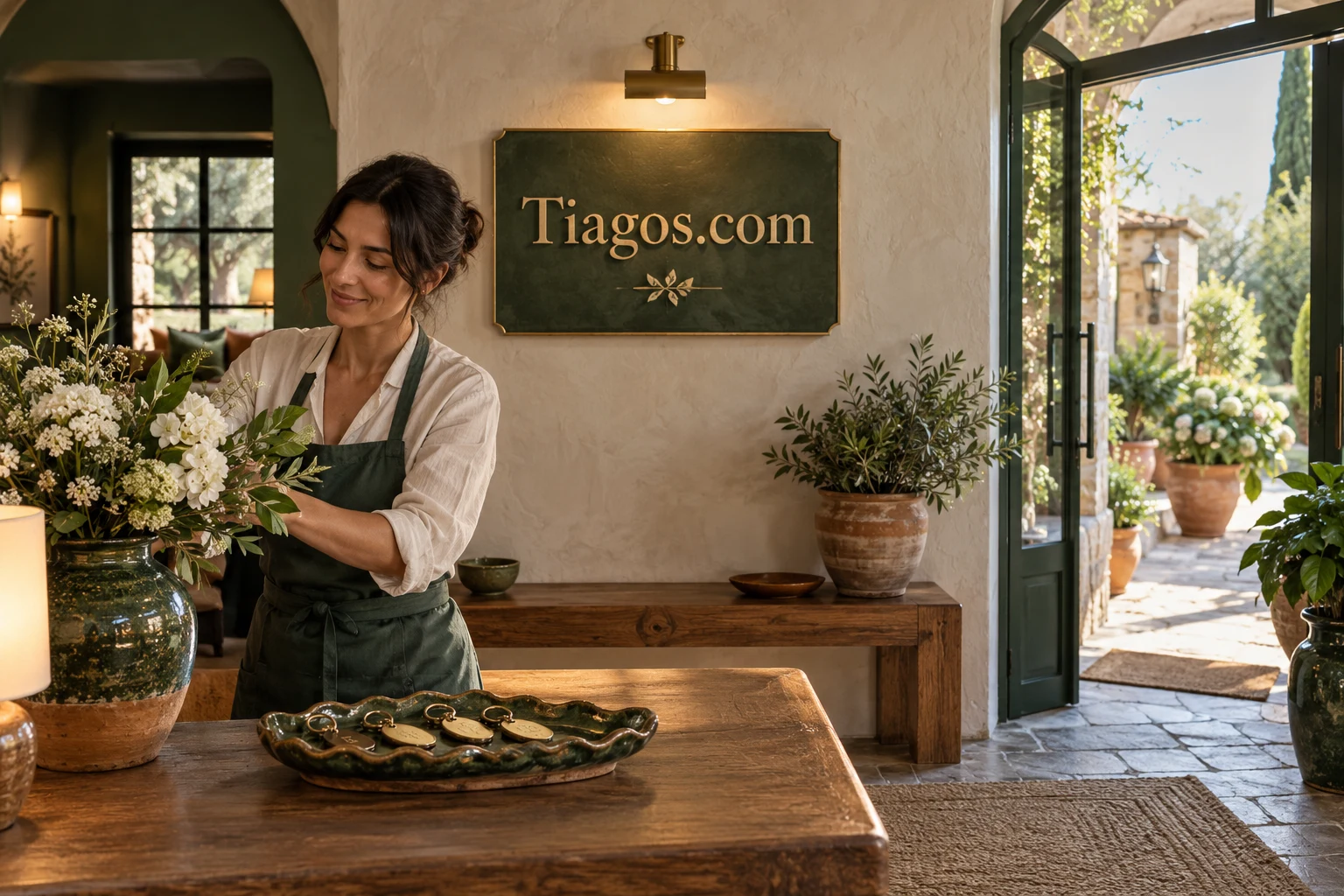
A small hospitality collection can bring together places with different buildings and a shared feeling of care. The connection becomes believable through what a guest experiences: clear directions, an easy arrival, a comfortable room and help when a plan changes. Tiagos.com could become the home of that kind of collection. This is an illustrative direction for a domain buyer, with one pilot property as the place to begin rather than an assumed portfolio of existing stays.
Define the trip the first property serves
Choose a guest journey specific enough to design around. A couple arriving late for a weekend break has different needs from someone staying near family for a week. Consider how guests travel, what they carry, when they arrive and what they need to arrange before leaving home. The resulting brief should explain the trip and the service expectations, not just an interior style.
Interview people about a recent comparable stay. Ask which messages helped them prepare and what they had to work out on arrival. Listen for avoidable uncertainty: an unclear parking arrangement, a hard-to-find entrance or a question that received no answer after normal hours. The concept can address a small set of those problems deliberately. It does not need a long list of amenities to make the first visit easier.
Map arrival in small steps
Write the route from booking confirmation to the first hour in the room. Include directions, transport information, entry instructions and the moment a guest learns how to contact someone. Have a person unfamiliar with the property follow those instructions. They should be able to explain where to go and what happens next without relying on local knowledge. Revise the information after observing their questions.
A consistent welcome can be modest. A clean, well-lit entrance, somewhere to place bags and a short explanation of the essentials may matter more than a complicated gift. If food is offered, consider storage, dietary information and replenishment. If access uses a digital system, plan how a guest gets help when a phone battery dies or a message is missed. The fallback should be understood by the person actually on duty.
Give the room a repeatable standard
Identify the things every property must deliver and the details that can vary locally. Bedding, cleaning checks, lighting and the accuracy of listing photographs belong in the common standard. Furniture, artwork and recommendations can reflect the place. A guest should recognize the quality of care without feeling that every room has been copied from the same catalogue.
Turn the standard into checks someone can complete in the available turnaround time. Test a room with luggage open, charging cables plugged in and bathroom items placed where a guest would use them. Walk through it after dark. A beautiful daylight photograph will not reveal a missing bedside socket or an entrance light that leaves the key difficult to see. Practical observations should guide improvements before decorative additions.
Make local recommendations dependable
A short set of accurate suggestions is more useful than an ambitious guide that becomes outdated. Recommend a breakfast option, an easy walk and a reliable meal for late arrivals, then check their current opening patterns. Make clear when a reservation is advisable and provide alternatives. Choose places for the guest's actual circumstances, including walking distance, transport and accessibility needs that the operator can verify.
Keep responsibility for updates explicit. A named team member can review recommendations before busy periods and record changes. Guests should be able to report a closed business or unclear direction without difficulty. This creates a manageable editorial task rather than a neglected folder. The Tiagos website could hold these practical guides alongside property information, with each page clearly tied to its location.
Build the operating picture before expanding
Track the work behind each stay: guest messages, cleaning, inspections, maintenance, laundry and resolving unexpected problems. Include time spent coordinating outside suppliers. A collection needs a way to maintain standards when a founder cannot visit every property personally. Before adding a second address, establish who responds, how issues are recorded and how the next shift knows what remains unfinished.
The SBA's market research framework can help structure questions about the intended customer and local alternatives. Its startup cost guide is useful for separating one-time preparation from recurring expenses. A property also needs location-specific professional advice and permissions. Treat those as separate workstreams, rather than assuming a domain or an attractive concept establishes permission to operate.
Make the first property the learning site
Run a complete guest journey test with people who did not write the instructions. Review messages and practical observations afterward. Ask what they needed to know sooner, which part of the room was awkward and what they would want to be certain of before booking again. Fix repeated friction before adding more features. The aim is a service pattern that remains workable on an ordinary busy day.
Tiagos offers room for a personal, welcoming hospitality identity across several locations, but a buyer would acquire the domain name only. Property rights, bookings, staff, permissions and operating systems are outside the offering. Start by mapping one pilot stay from confirmation through departure. A collection can grow from a consistent guest experience when the first address has shown what that consistency requires.