
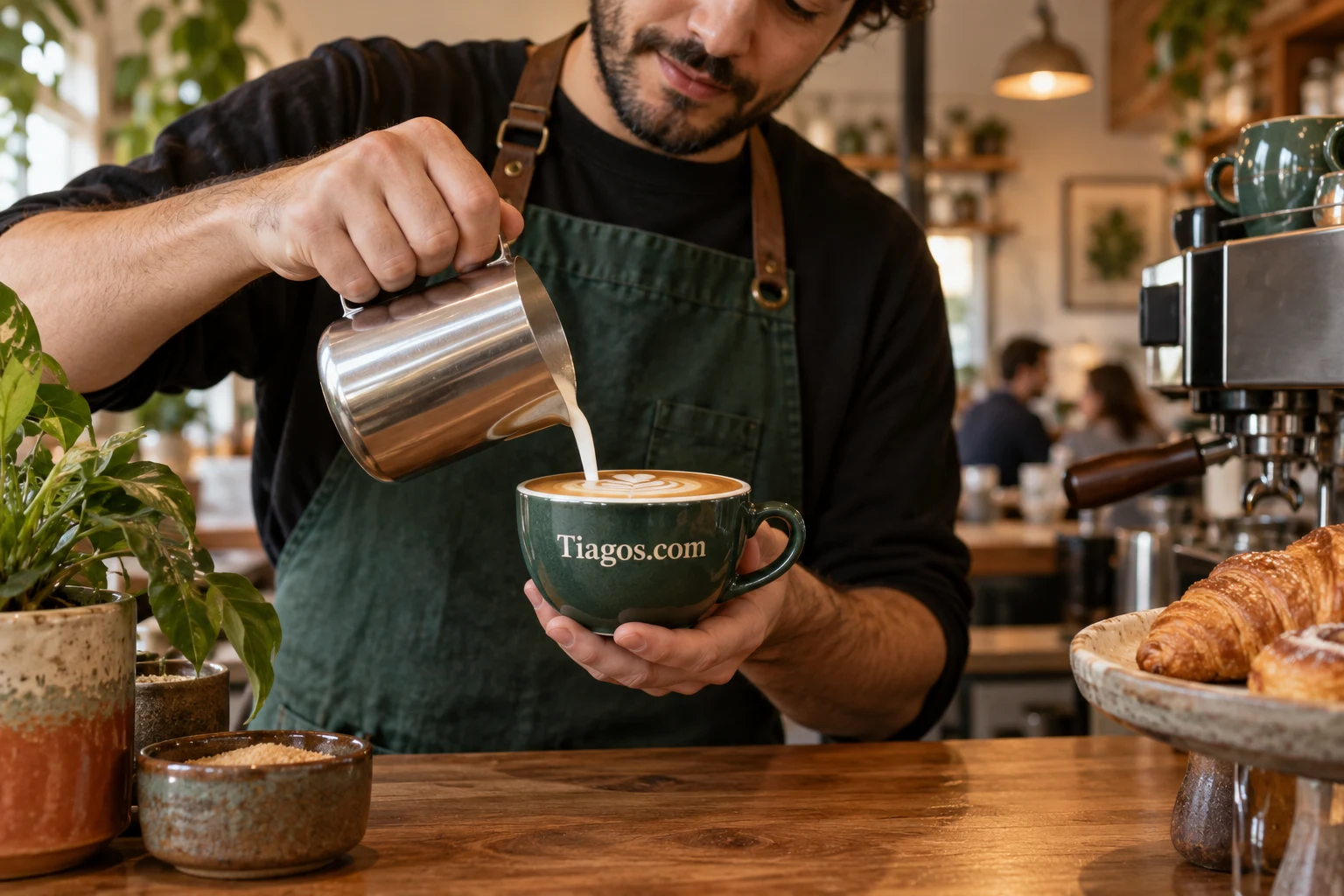
A good neighborhood cafe earns a place in an ordinary Tuesday. Someone needs a coffee before work, a comfortable table between appointments, or lunch that arrives within a short break. The interesting question is which of those visits a founder can serve particularly well. Tiagos.com could become the home of a cafe built around that answer. This is an illustrative concept for a prospective domain buyer, with a practical starting point: understand one neighborhood before designing a larger brand.
Start with a recurring occasion
Choose a first customer occasion narrow enough to observe. Morning commuters, parents after the school run and people working nearby have different expectations. A commuter might value a clearly marked collection point. A parent might need room to park a stroller. Someone taking a working lunch may care more about dependable food and a place to sit than an elaborate drinks menu. Spend time watching the street at several hours, then speak with people about where they currently go and what makes that choice easy.
Ask about a recent visit rather than an imaginary preference. Where did they buy breakfast yesterday? How long could they wait? What did they spend, and what would have caused them to go elsewhere? These conversations can reveal a specific service gap. They do not prove demand by themselves. Treat them as a way to design a test that asks customers to make a real choice, such as paying for a short breakfast menu at a permitted pop-up.
Make the first menu small enough to learn from
A starting menu might include a few coffee preparations, one breakfast item and two lunch options sharing some ingredients. The point is to understand preparation and demand before adding variety. Write down each item's ingredients, preparation time, storage needs and likely waste. Include the time spent receiving deliveries and cleaning equipment. A dish that looks simple on a menu may create several separate jobs behind the counter.
Try the menu during the actual occasion being tested. A leisurely weekend tasting tells little about a weekday queue. Record orders by time, how long customers wait and which items run out. Note substitutions, dietary questions and abandoned orders. If a popular item repeatedly slows the whole service, revise its preparation or remove it for the next test. The menu should make a clear promise the small team can keep through a busy half hour.
Give the room a useful rhythm
A cafe needs more than an attractive front table. Map the route from arrival to ordering, collection and clearing. Someone entering for the first time should be able to see where to stand and what to do. Give staff enough space to move hot drinks safely. Separate takeaway collection from the point where new guests ask questions when the footprint allows it. Test those movements with people carrying bags and wearing coats, because the room will be used that way.
Warm materials can make a modest space feel considered. Oak, glazed ceramics and a restrained green palette would suit the Tiagos identity, but every choice should survive cleaning, daily handling and replacement. Spend money on the surfaces and equipment customers or staff touch repeatedly. A comfortable chair and a dependable cup may contribute more to the visit than an elaborate decorative wall. Lighting should help people read the menu and recognize their food as well as make the room inviting.
Become useful to neighboring businesses
Start with a small number of relationships. A nearby studio might need preordered lunches on a particular day. A florist might appreciate a sensible collection arrangement during a seasonal event. A bookshop could help test a short evening gathering if the format suits both spaces. Agree the responsibilities and costs before announcing anything. A partnership is easier to repeat when each participant understands how orders, payment and cleanup work.
The website can carry the practical details that prevent confusion: current hours, menu, accessible entrance information, collection instructions and an accurate location. Tiagos.com offers a concise address that can appear on a cup, storefront or receipt. The buyer would still need to establish naming rights, secure relevant permissions and build the actual service. The domain is the starting asset; the neighborhood relationships and operating reputation have to be earned.
Decide what earns a second test
Before the first event, set a few questions whose answers could change the plan. Can the team complete the menu at the intended pace? Do enough customers choose the core items at the planned prices? Does demand continue beyond friends and invited guests? Keep a record of costs and work time alongside sales. A full room can hide an exhausting or uneconomic service pattern.
The SBA's market research guide is a useful framework for investigating customers and nearby alternatives. Food permissions need their own attention; the FDA's food business starting guide points founders toward relevant federal, state and local questions. Begin with resident interviews and one bounded menu test. Expand the concept only when the evidence gives a clear reason to do so.